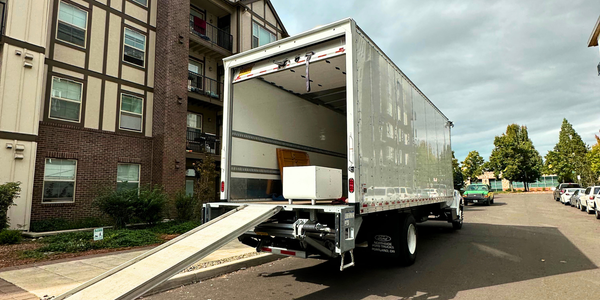


So you’ve decided to do it — trade two rent checks for one and figure out whose couch actually belongs in a shared living room. Whether you’re moving in with your boyfriend, girlfriend, or long-term partner, merging two fully furnished apartments into a single home is one of those things that sounds simple until you’re standing in a kitchen with two coffee makers, three sets of sheets, and zero plan.
With over 1.5 million Lugg moves and counting, we’ve seen what the cohabitation move actually looks like from the inside. One customer summed it up perfectly:
“[Moving a] Mattress and bed frame. Nothing wrong with either — moved in with my girlfriend and don’t need 2 of them.”
That’s the couples’ move in a nutshell. This 2026 moving in together checklist covers the full process: what to talk about before you pack a single box, how to sort through duplicate everything, the logistics of a two-apartment pickup, and how to keep the peace when your taste in furniture doesn’t exactly align.
Quick reference: your moving in together timeline
| Timeline | Task | Why it matters |
|---|---|---|
| 3+ months out | Review both leases, align move-out dates, give notice | Most leases require 60 days' notice — miss the window and you're locked in another term |
| 6+ weeks out | Have the money talk, inventory duplicates, set a budget | Lease break fees can run $1,000–3,000 — budget early |
| 4 weeks out | Sell or donate surplus items, start packing | Furniture takes 1–3 weeks to sell on Marketplace |
| 2 weeks out | Book movers, order packing supplies, confirm elevator access | Two-stop moves need more planning than a standard move |
| Move week | Finish packing, label everything, pack "first night" bags | One bag each — charger, toiletries, change of clothes |
| Move day | Have someone at each pickup location, let movers handle heavy lifting | Almost every two-location move takes longer than expected |
The conversations to have before you pack anything
The biggest mistakes couples make when moving in together aren’t logistical — they’re conversational. According to the Gottman Institute, couples who discuss expectations around finances, space, and household responsibilities before cohabitating report significantly higher relationship satisfaction in the first year.
Before a single box gets taped shut, sit down and cover these topics:
- Money. How will you split rent? Utilities? Groceries? The most common models are a 50/50 split (if your incomes are similar) or a proportional split based on what each person earns. The 50/30/20 rule — 50% needs, 30% wants, 20% savings — is a useful starting framework for couples building a shared budget for the first time.
- Space. Who gets the closet? Is there a room that doubles as a home office? If one of you works from home, that changes the equation on how you divide square footage.
- Stuff. You both have a couch. You both have a bed. Somebody’s blender is better. Having the “what stays and what goes” conversation early prevents move-day arguments.
- Chores. It sounds small, but “who cleans the bathroom” is one of the top sources of cohabitation conflict. Agree on a rough division of labor before you’re three weeks in and resentful.
How to sort through two apartments’ worth of stuff
When two fully-furnished apartments merge into one, you end up with duplicates of almost everything. The key is deciding early — not on move day — what makes the cut.
The keep, sell, or donate framework
| Keep | Sell | Donate |
|---|---|---|
| Higher quality of the two | Good condition, resale value | Worn but functional |
| Sentimental and fits the space | Duplicate small appliances | Clothing that doesn't fit |
| Agreed on by both of you | Extra TV, bookshelf, desk | Books, kitchenware, linens |
A practical rule: go room by room with a shared spreadsheet. List every major item you both own, note condition and who bought it, and flag duplicates. The better item wins. If quality is equal, the person who cares more gets the tiebreaker.
For things you can’t agree on or aren’t sure about, a short-term storage unit buys you breathing room. One Lugg customer described this exact approach:
“Moving a mattress, chest of drawers, rolling drawers, bookshelves, dining room table and chairs — most of it going to storage.”
Not everything merges cleanly into one place on day one. That’s fine. Build that into your plan.
For items that are definitely going, Facebook Marketplace, Craigslist, and OfferUp move furniture fast — especially sofas, bed frames, and dining sets. List a week or two before the move so it’s gone before you need to be out. Habitat for Humanity ReStores, Goodwill, and local Buy Nothing groups are great for functional pieces that aren’t worth the listing hassle.
The two-apartment pickup: how it actually works
Most cohabitation moves involve two separate pickup locations — your place and theirs — combining into one new place. This is different from a standard move and worth planning for specifically.
Here’s how Lugg customers typically describe it:
“My partner and I are moving in together, so there are two pickup locations about a 2-minute drive from each other.”
“We are moving in together — the furniture needs to be moved from two separate units to one home, but the units are within two blocks of each other.”
A few things that make the two-stop move smoother:
Book a service that handles multiple stops. Lugg, an on-demand moving service available in 8,000+ U.S. zip codes, supports up to 5 stops per move — enter your first pickup, add the second address, and the movers drive from stop one to stop two before heading to your new place.
Stage everything before they arrive. Have everything packed and staged near the door or curb at both locations. The faster the load, the less you’re paying for standing-around time.
Have someone at each location. If you can’t be in two places at once, leave a key or have a friend let movers in at the second stop.
Label what’s going where. Even sticky notes on furniture help — “bedroom,” “living room,” “garage/storage.” Saves everyone time at drop-off.

The full moving in together checklist
Merging two apartments isn't just about moving boxes; it's about logistical synchronization. Follow these steps to ensure a smooth transition:
3+ months out: align your leases
This is the step most couples skip — and the one that costs the most when they do. Before you start packing or shopping for a new place, look at when both of your leases actually end.
Check your notice windows. Most apartments require 60 days’ notice before your lease ends. That means you need to tell your landlord whether you’re renewing or leaving at least two months out. Miss that window, and you could be automatically locked into another lease term.
Try to align your move-out dates. The ideal scenario is both leases ending around the same time. If one lease ends in June and the other in September, the earlier person either needs to break their lease, go month-to-month, or find temporary housing. If you’re also downsizing in the process, start selling the big pieces first. Planning around lease end dates saves you the most money.
Understand what breaking a lease actually means. If you need to break a lease early, most complexes require 1–2 months of additional rent on top of a lease-break fee (typically $1,000–3,000). And you usually can’t leave immediately — you still have to stay for another 30–60 days after giving notice. In most cases, it’s cheaper to wait for the lease to end naturally than to break it early.
Do the math together. Compare the cost of breaking a lease vs. paying overlap rent on two apartments for a month or two vs. waiting until both leases expire. Often, a month of double rent is still cheaper than a lease-break fee.
6+ weeks out: lay the groundwork
Have the money talk. Decide how you’re splitting rent, utilities, and the move itself. Set a combined moving budget that includes movers, packing supplies, any new furniture, and a buffer for the unexpected.
Walk through both apartments together. Go room by room and decide what’s coming, what’s being sold, and what’s being donated. Decide now, not when two movers are standing in the hallway.
Measure the new space. Will your king bed fit the bedroom? Sketch out a rough floor plan so you know what furniture you’re actually bringing.
4 weeks out: sell, donate, and start packing
List and sell your surplus items. Furniture takes 1–3 weeks to move on Marketplace or Craigslist. Don’t wait until the week before your move.
Donate what you can’t sell. Habitat for Humanity ReStores and Goodwill take furniture in decent condition. Some offer free pickup for larger items.
Start packing things you use infrequently. Books, seasonal clothes, and decor can go in boxes now. Color-code by person — one color for each of you and a third for shared items.
2 weeks out: logistics mode
Book your movers. If you’re doing a two-stop move, confirm the service handles multiple pickups. With Lugg, you add both addresses when you book.
Confirm elevator and loading dock access. Check reservations at both pickup locations and the new place. Some buildings require 48-hour advance notice.
Consolidate digital accounts. Merge streaming subscriptions, set up shared utility accounts, update your addresses. Doing this now prevents double-paying next month.
Move week: finish strong
Finish packing and label everything by room. Your movers will move faster when every box says where it goes.
Pack a “first night” bag — each. Phone charger, toiletries, a change of clothes, medications, coffee supplies, and a set of sheets. Add a bottle of something to celebrate with.
Do a final walkthrough of both apartments. Check closets, cabinets, and that one shelf above the fridge nobody ever looks at. Take photos for your security deposit.
After the move
Update your address everywhere. USPS, banks, employer, subscriptions, insurance, voter registration. A forwarding address covers most mail, but updating directly is more reliable.
Set up utilities under both names. If you’re splitting bills, having both names on accounts makes it easier to manage.
Deal with remaining surplus items. Don’t let the “I’ll sell it later” pile sit. If it didn’t make the cut for the new place, move it out within two weeks.
One thing couples always underestimate
Time. Almost every two-location move takes longer than expected, especially if either apartment has stairs, a long walk from the parking spot, or a slow elevator.
If you’re booking movers, build in buffer. A third-floor walk-up and a building with a freight elevator are two very different jobs. Be specific when you describe the move so movers show up with the right number of people and equipment. And don’t forget to budget for a mover tip — it’s standard and appreciated.
And if the plan shifts last minute — Lugg lets you book same-day in most cities, so you can usually get help fast even when things don’t go to plan.
3 ways to keep the peace after you move in
1. Use the "one veto" rule. Give each person one unconditional veto on a piece of furniture or decor. If your partner truly can't live with the neon beer sign, it goes. No negotiation, no hard feelings.
2. Designate an unpacking-free zone. Set up one room — even just the bedroom — as a box-free sanctuary from day one. Having a clean, calm space to retreat to makes the chaos of unpacking the rest of the apartment far more bearable.
3. Set an unpacking deadline. Agree that all boxes will be emptied within two weeks. Without a deadline, "I'll get to it this weekend" turns into three months of living around half-opened boxes — and one person quietly resenting the other for not pulling their weight.

How to split expenses when you move in together
Money is the number one topic couples argue about after moving in together. Setting up a system before you share a roof prevents most of the friction.
The 50/50 split works if your incomes are roughly equal. You each pay half of rent, utilities, and groceries. Simple, but can feel unfair if one partner earns significantly more.
The proportional split divides shared costs based on income. If one partner earns 60% of the household income, they cover 60% of shared expenses. This tends to feel more equitable in relationships with a significant income gap.
The “yours, mine, ours” system uses three accounts: one joint account for shared expenses (rent, utilities, groceries) funded proportionally, and individual accounts for personal spending. Most financial advisors recommend this approach for unmarried couples.
For the move itself, most couples split moving costs evenly — especially if you’re both contributing furniture. If one person has significantly more stuff, it’s fair to adjust. Get a quote upfront so there are no surprises.
Frequently Asked Questions
How long should you date before moving in together?
There’s no universal rule, but most relationship therapists suggest at least one year of dating before moving in together. The key indicators are less about time and more about whether you’ve navigated conflict together, discussed finances openly, and spent extended periods in each other’s space.
What is the 50/30/20 rule for couples?
The 50/30/20 rule is a budgeting framework where 50% of your combined after-tax income goes to needs (rent, utilities, groceries), 30% to wants (dining out, entertainment, travel), and 20% to savings and debt repayment. Couples moving in together often use this as a starting point for their first shared budget.
What should you not do when moving in together?
The biggest mistakes are skipping the money conversation, assuming you’ll “figure it out” as you go, keeping duplicate furniture without measuring the new space first, and moving in to save money rather than because the relationship is ready. Also: never surprise-move a pet into a shared apartment without discussing it first.
How do couples decide whose furniture to keep?
Go room by room and compare quality, condition, and size. The better item wins. If quality is equal, the person who cares more gets the tiebreaker. For items you can’t agree on, a short-term storage unit buys you time to see what actually fits in the new space.
Is it cheaper for two people to live together than apart?
Almost always, yes. Couples who move in together typically save 25–30% on housing costs compared to maintaining two separate apartments, according to data from the Joint Center for Housing Studies. You also split utilities, internet, and household supplies — savings that add up to $500–$1,000+ per month in most metro areas.
Can Lugg handle a move from two pickup locations?
Yes. Lugg supports multi-stop moves in 500+ U.S. cities. Add your second pickup address when booking, and the movers will stop at both locations before delivering everything to your new place. It’s the same booking process — just an additional address.
What is the 3-6-9 rule in relationships?
The 3-6-9 rule suggests that relationships face natural evaluation points at 3 months, 6 months, and 9 months. At each stage, couples reassess compatibility. Some relationship coaches recommend waiting until you’ve passed at least the 9-month mark before making major commitments like moving in together.
How long does a two-apartment move take?
A two-stop move with roughly one bedroom’s worth of stuff at each location typically takes 3–5 hours with two movers, depending on stairs, elevator wait times, and distance between stops. Build in buffer — it almost always takes longer than you think.
Ready to start your new chapter?
Moving in together is a major milestone — and the move itself doesn’t have to be a disaster. The couples who pull it off smoothly are the ones who made decisions before move day, not during it. Know what’s coming, plan for two stops, deal with the duplicates in advance, and let someone else handle the heavy lifting. Book on the Lugg app or at lugg.com — two pickup locations, one destination, zero arguments about who has to carry the dresser.