
A move stresses a cat because it erases their territory. Cats bond to a place by scent-marking it, so an empty house full of boxes and missing furniture reads as a different, threatening world. What helps is shrinking your cat's entire world down to one safe room and letting them rebuild their territory on a timeline.
A frightened cat's first instinct is to bolt toward the old, familiar place, and a lost cat without a microchip is rarely recovered. Among stray cats that end up in a shelter, the microchipped ones are reunited with their owners 38.5% of the time, against 1.8% for cats with no chip, according to research published in the Journal of the American Veterinary Medical Association. So before you think about the drive, think about confinement, scent, and identification.
Quick reference: the cat-move timeline
| When | What to do | Why it works |
|---|---|---|
| 2–3 weeks before | Leave the carrier out, open, with treats inside. Update microchip and ID tag. | Removes the carrier as a trigger; protects against escape. |
| Last 48 hours | Set up a "safe room" at the old place. Don't wash bedding or toys. | Keeps familiar scent intact for the move. |
| Moving day | Cat goes in the carrier last, comes out first. Carrier only — never loose in the car. | Shortest possible time in chaos; no bolt risk. |
| First 3 days (new home) | Cat stays confined to one safe room with all their things. | Cats settle into one room far faster than a whole house. |
| Weeks 1–4 | Open the house one room at a time. Run a pheromone diffuser. | Lets territory expand at the cat's pace. |
Why is moving so stressful for cats?
Moving is stressful for cats because it destroys the invisible map of scent they've built across your home. Cats rub their cheeks and bodies on furniture, walls, and doorframes to mark territory as safe. When the furniture disappears into a truck and the rooms go bare, that map vanishes, and even a confident indoor cat can suddenly hide, stop eating, yowl, or try to escape.
Dogs and cats need completely different moving plans. A dog's security is tied to you; a cat's is tied to the place. You can't reassure a cat the way you reassure a dog. You give the territory back, one familiar smell at a time. If you're moving a dog at the same time, moving with pets covers what they need.
How do I prepare my cat for a move?
Start two to three weeks out, and start with the carrier. Most cats only see the carrier before a vet visit, so it already means something bad. Leave it open in a room your cat likes, put treats, a worn t-shirt, or a favorite toy inside, and let them wander in and out on their own. By moving day, the carrier should read as ordinary furniture.
Do two more things early. First, update your cat's microchip registration and ID tag with your new address and phone number, so a cat who slips out during the move can be traced back to you. Second, resist the urge to deep-clean. Don't wash the cat bed, scratching post, or favorite blanket in the weeks before a move; those carry the scent your cat will use to feel at home on the other end.
And keep the routine boringly normal. Feed at the same times, keep the litter box where it's always been, and leave your cat's things in place until the last possible moment. The sudden disappearance of familiar objects is its own stressor.
What is a cat safe room?
A safe room is one closed-off room that holds everything your cat needs: litter box, food, water, bed, a few familiar toys, and a place to hide, so they can decompress in a small, controlled space instead of a strange, echoing house. Cats acclimate to a single room far faster than to an entire home, which is why both the ASPCA and VCA Animal Hospitals recommend one.
Set the safe room up before your cat arrives at the new place. A bathroom works well: it's small, easy to close off, and usually away from the front door and the moving traffic. Bring in their unwashed bedding and litter box first, and close the door. When you carry the cat in, set the open carrier down inside and let them come out on their own terms. Don't tip them out or coax them. Some cats explore in an hour; some hide under the bed for two days. Both are normal.
How do I move a cat on moving day?
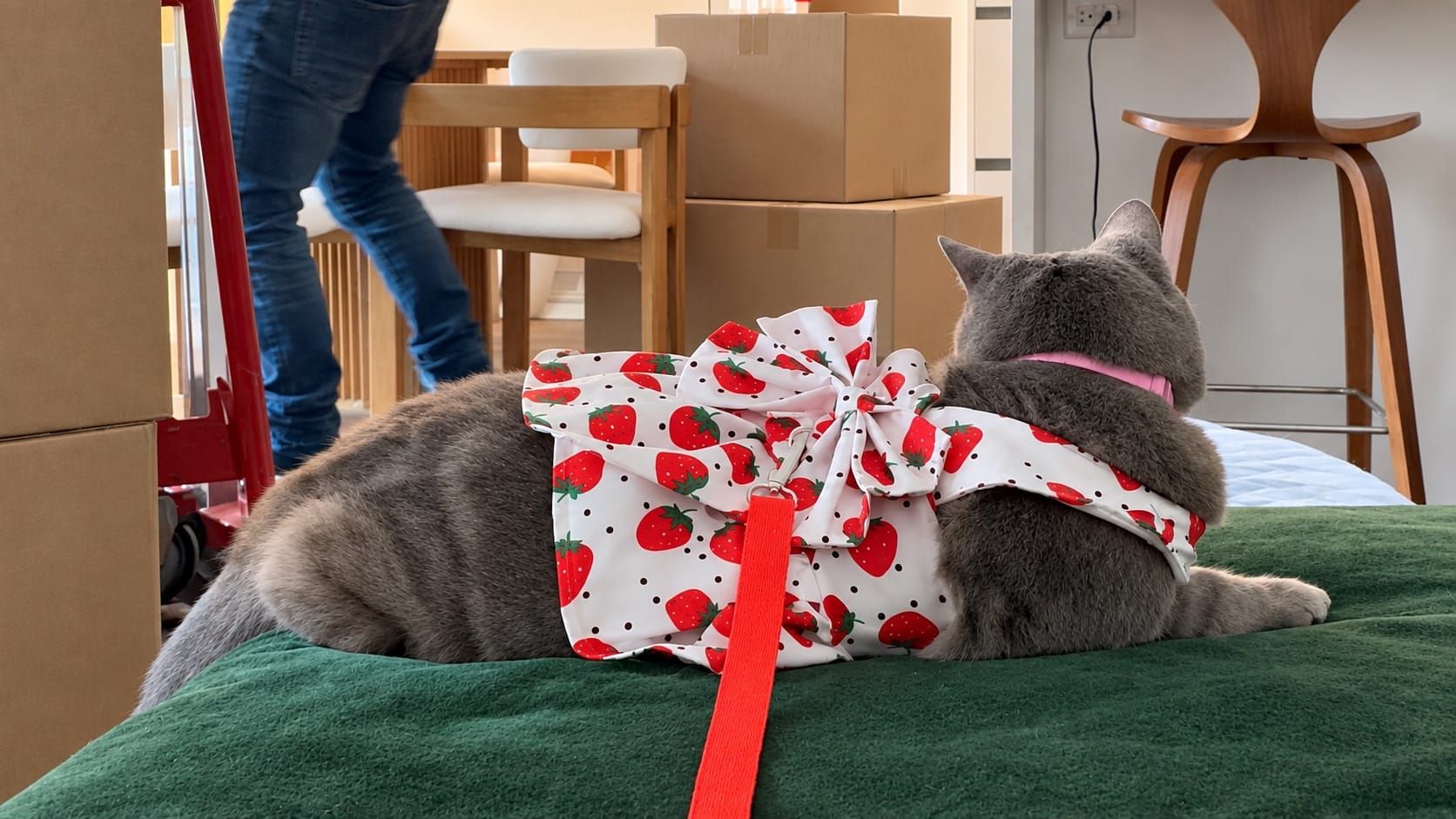
On moving day, your cat should be the last thing to leave the old home and the first thing settled at the new one, and they should never ride loose in the car. Confine your cat to the safe room early in the day, with a sign on the door so no one props it open while carrying boxes.
Once the truck is loaded and the old place is quiet, put your cat in the carrier and buckle the carrier into the back seat. Don't open it at rest stops, and don't let your cat roam the car. A panicked cat under the brake pedal is dangerous for everyone.
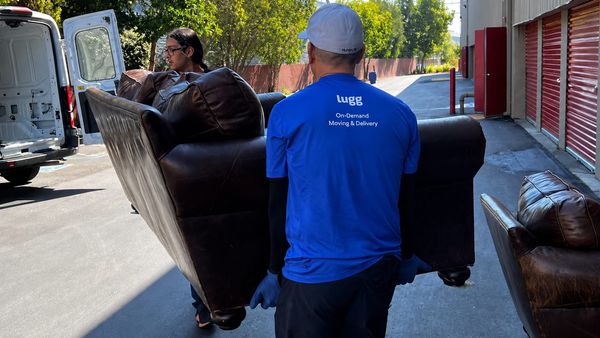
Every time the front door opens, your cat has a way out, and in an apartment move that includes a propped building door and a shared hallway. Movers go back and forth to the truck for hours, so the safe room stays shut for the whole visit, from the first box to the last. Lugg is an on-demand moving and delivery service that books a truck and a scheduled arrival window, so you know when that stretch starts and can have your cat shut in before it does.
How long does it take a cat to adjust to a new home?
Most cats take two to four weeks to settle into a new home, and sensitive cats can need up to eight. You'll also see it described as the 3-3-3 rule: about three days to decompress, three weeks to learn the new routine, and three months to fully relax and bond with the space. Expect hiding, a smaller appetite, and some clinginess or aloofness in the first days, all of which is normal.
A synthetic pheromone diffuser can help. Products like Feliway mimic the facial-marking pheromone cats use to signal "this place is safe." Plug one into the safe room two to three days before your cat arrives and run it for four to six weeks while they expand into the rest of the house.
How do I help my cat reclaim territory after the move?
You help a cat settle by letting them re-mark the new place as their own, gradually and on their schedule. Once your cat is eating, using the litter box, and moving around the safe room comfortably, open the door and let them explore one new room at a time rather than the whole house at once. Keep the safe room as their home base they can always retreat to.
Speed it up with scent. Take a soft cloth, gently rub it on your cat's cheeks where their scent glands are, and dab it on furniture corners and doorframes at cat height, seeding the new home with their own smell. Keep feeding times, play, and the litter box consistent. Watch for the tells that they've claimed the place: cheek-rubbing on furniture, stretching out to sleep in the open, and asking for play.
If your cat stops eating for more than a day or two, hides without a break for longer than a few days, or shows signs of illness, call your vet, because prolonged stress can tip into a medical issue.
What a settled cat looks like
Moving asks your cat to give up one territory and build a new one from scratch. Handle the carrier early, protect against escape with a microchip and a sealed safe room, keep their scented things unwashed, and let the new home open up one room at a time. Get the move itself off your plate so you can focus on the cat, and in a few weeks the bare new rooms will smell like theirs again.