
Dolly is no longer a separate service. Taskrabbit retired the Dolly brand in May 2026 and folded it into Taskrabbit Delivery, so the real choice here is between Lugg and Taskrabbit's two products. Lugg is an on-demand moving and delivery service that includes a truck and vetted movers in every booking, with the estimate shown upfront and the job confirmed the moment you book. Movers can arrive within the hour, or you can schedule up to 60 days out. Taskrabbit Delivery handles store pickups and single-item hauls, but a Helper has to accept your job before anything is confirmed. Regular TaskRabbit covers non-moving work like assembly, handyman tasks and errands, where a truck isn't guaranteed and Taskers set their own hourly minimums. Here's how they stack up on price, reliability, and convenience.
Quick comparison: Lugg vs Dolly vs TaskRabbit
| Feature | Lugg | Dolly (now Taskrabbit Delivery) | TaskRabbit |
|---|---|---|---|
| Best for | Moving, delivery, heavy items, junk removal | Small moves & store pickups | Errands, assembly, handyman, some moving help |
| Truck included | Always, with movers | Only if matched with a Helper who has one | Sometimes — depends on the Tasker |
| Booking confirmed | Instantly | Not until a Helper accepts | Not until a Tasker accepts |
| Pricing | Upfront estimate when you enter addresses | Flat rate, shown only after full details | Set by each Tasker; hourly minimums common |
| Availability | On-demand (within the hour) or up to 60 days out | Scheduled windows | Depends on Tasker |
| Cancellation | No fees before arrival | Fees apply; check current terms | Varies by Tasker |
| Damage coverage | Damage Protection Guarantee | Capped; check current terms | Discretionary "Happiness Pledge" |
| Support | 24/7-style live chat & email | Chatbot/email only | Tasker-dependent |
| Ownership | Independent, founder-owned | Taskrabbit (acquired 2024, rebranded 2026) | Owned by IKEA's Ingka Group (since 2017) |
How much do Lugg, Dolly, and TaskRabbit cost?
Across three common scenarios, Lugg consistently came in lowest, with the gap widening as the move got bigger. The figures below are average estimates for comparable Bay Area jobs (same pickup and drop-off, mid-2026), and actual costs vary by location, distance, item count, and timing.
| Scenario | Lugg | Dolly (now Taskrabbit Delivery) | TaskRabbit |
|---|---|---|---|
| Store / single-item delivery | ~$91 | ~$159 | ~$150+ |
| 1-bedroom apartment move | ~$540 | ~$769 | ~$800 |
| Full home move | ~$1,100 | ~$3,073 | varies widely by Tasker |
The pattern: Dolly's flat-rate pricing looks simple but isn't tied to vehicle size, so a small job and a large one can cost the same per item, and item-based pricing makes big moves dramatically more expensive. TaskRabbit can look competitive for one person, but bookings are usually single-Tasker, so a two-person move can double. Lugg prices by vehicle size plus per-minute labor with no hourly minimums, which keeps larger moves predictable and often 30–60% below the alternatives.
What is TaskRabbit?
TaskRabbit is a gig marketplace for hiring local help: furniture assembly, handyman tasks, cleaning, errands, and some moving. It's owned by IKEA's Ingka Group (acquired in 2017). For moving, you can hire a Tasker with a vehicle or labor-only help, but a Tasker has to accept the job before it's confirmed, and each one sets their own rate and often an hourly minimum. That makes TaskRabbit strong for odd jobs and assembly, but less predictable for moving: availability and reliability come down to the individual you pick, and a short job can still cost the full minimum.
What happened to Dolly?
Dolly launched as a moving and delivery app built around furniture and store pickups. Taskrabbit acquired it in 2024, retired the Dolly name in May 2026, and dolly.com now redirects to Taskrabbit Delivery. Existing customers had their app converted rather than replaced, and the worker roles carried over, so you are still matched with a Helper (an independent contractor with a truck) or a Hand (labor only). Taskrabbit says pricing structures did not change in the transition, and neither did the booking model: nothing is confirmed until a Helper accepts your job, and store deliveries still run in two-hour windows. Add-ons such as furniture assembly are billed on top. Cancellation fees and damage coverage were restated under the new brand, so check the current Taskrabbit Delivery terms before booking rather than relying on Dolly-era numbers.
What is Lugg?
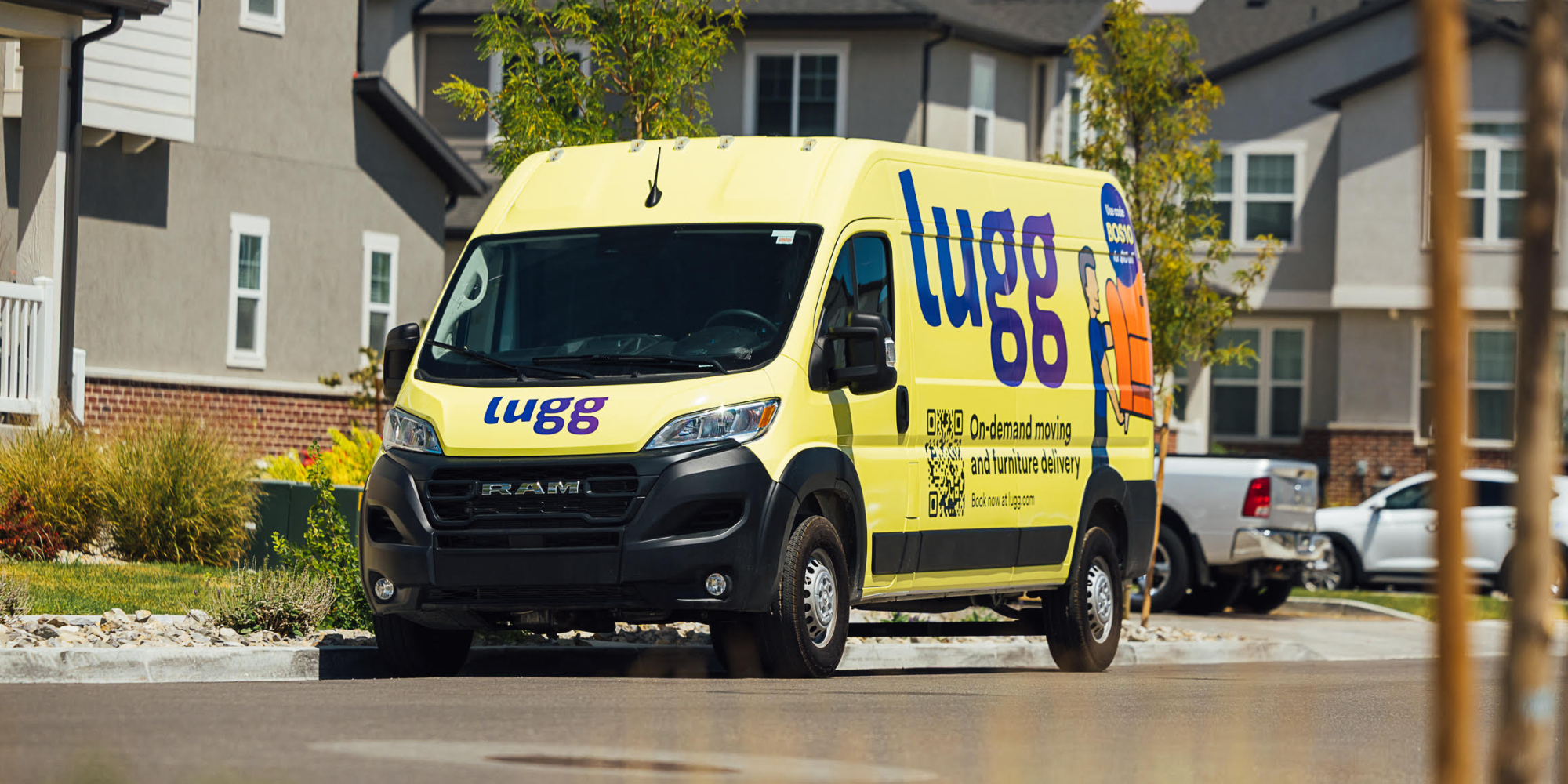
Lugg is an on-demand moving and delivery service built only for moving, delivery, and hauling, so every part of the experience is tuned for it. Every booking automatically includes a truck and vetted movers, with the estimate shown upfront as soon as you enter your pickup and drop-off addresses. Movers can be at your door within the hour, or you can schedule up to 60 days in advance.
For store deliveries, Lugg charges a flat rate; for larger moves, pricing is vehicle size plus per-minute labor, so you only pay for the time the crew is actually working, with no hourly minimums and no hidden add-ons. People use Lugg for apartment and home moves, college and dorm moves, appliance and furniture delivery, Marketplace and estate-sale pickups, donation drop-offs, junk removal, and storage moves. With over 1.5 million Lugg moves at a 4.92/5 average rating, it's the option built specifically for "this is big, heavy, and I don't want to figure out a truck."
👉 Want to see exactly how it works? Watch our YouTube video to learn how to get a free estimate in the Lugg app and see how upfront pricing works.
Reliability: the part people overlook
The biggest practical difference is whether your booking is actually confirmed. With Taskrabbit Delivery and TaskRabbit, a worker has to accept your job first, so you can book days out and still have no one show on moving day. Lugg bookings are instantly confirmed, with no waiting for someone to "accept." If you're moving on a deadline (a lease end, a closing date, a truck rental you have to return), that confirmation is often worth more than a small price difference.
What customers say
Real reviews capture the trade-offs better than spec sheets. A few representative ones:
"Beats the competition! Lugg beats the heck out of Dolly on price and TaskRabbit on ease of scheduling. I will use it again and again!" — Zhenkitty (App Store)
"Used Lugg over Dolly for a quick FB Marketplace furniture pickup, and it was almost $150 cheaper! The guys who came moved all the parts and pieces really quickly." — Stephanie R. (Google Maps)
“The app worked well for me. Dolly, which I used once before to hire help loading and unloading a truck I rented, was not working for two days, so I sought another service and found Lugg. I was able to book a truck and two movers to assist the same day. The price was what I'd expect and cheaper than the Bellhop quote. I could see the status of the movers as they drove over and could communicate via text. I'd use this again if I find myself needing moving help.” by Sam (Google Play)
Common complaints about the alternatives center on the same themes: surprise charges above the quoted price, last-minute Tasker cancellations, and unclear final costs.
Tipping is optional on all three and 100% goes to the workers, though the mechanics differ by app. Lugg suggests 15%–20% of the total, added in the app and split equally among the crew. For the full breakdown, see Lugg's guide to how much to tip movers.
Side-by-side estimate comparison: Lugg, Dolly, and TaskRabbit
To see how pricing stacks up across platforms, we ran a side-by-side estimate comparison in the Bay Area using the same pickup and drop-off addresses for each service. We tested three common scenarios:
- Store Delivery: Picking up 1–2 items (e.g., a dining table and coffee table from Williams-Sonoma) and delivering them about 1.5 miles to an apartment in San Francisco. Average time: ~1 hour.
- Small Apartment Move: Moving a one-bedroom apartment with around 10–11 items (sofa, bed frame, mattress, dining table, boxes, and more) about 18 miles from Oakland to San Francisco. Average time: ~2–3 hours.
- Full Home Move: Relocating a two-bedroom home with ~15 larger items (multiple beds, mattresses, couches, dining furniture, desks, and more) across the same route. Average time: ~4–5 hours.
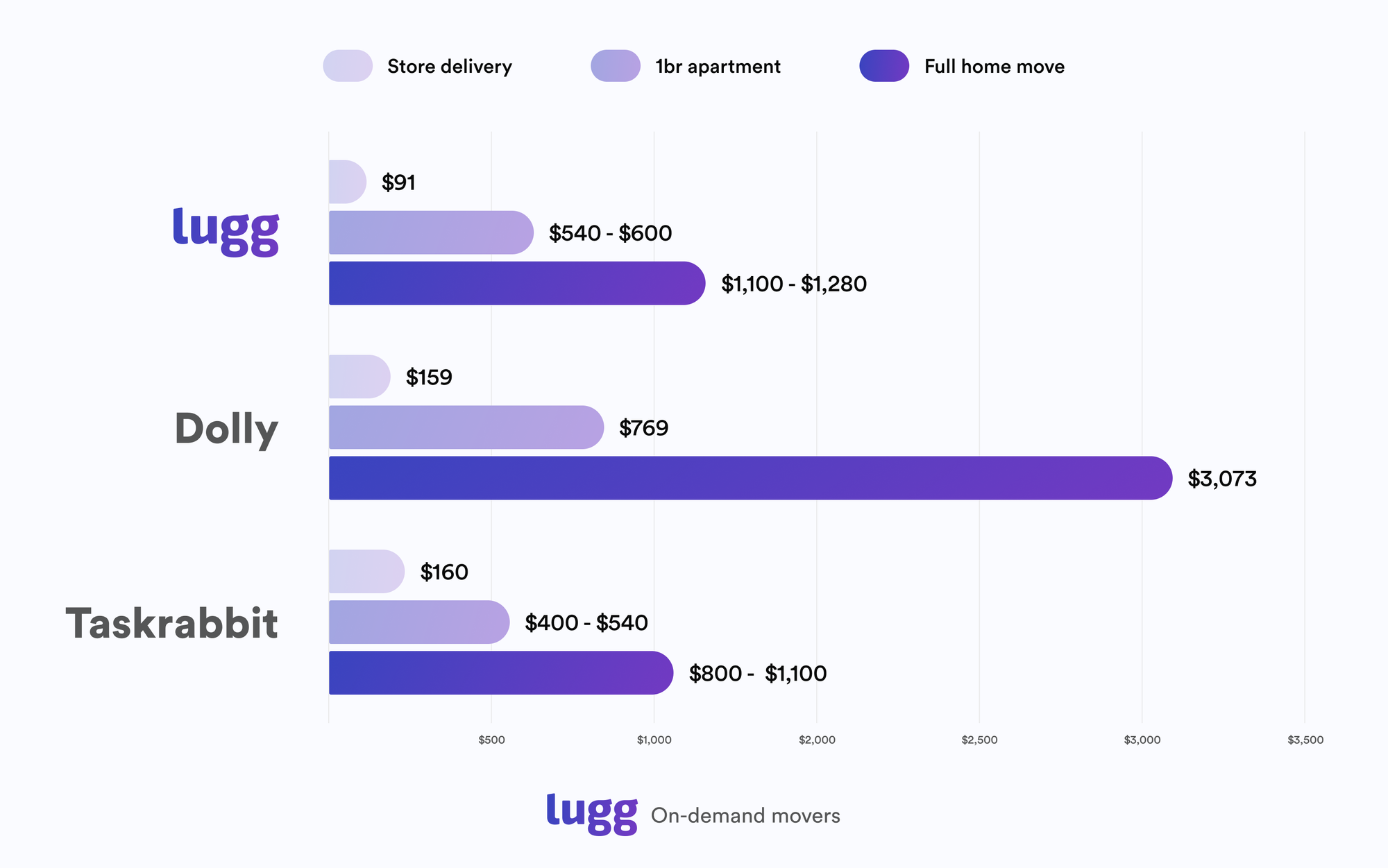
Note: These figures are based on estimates available through each platform, combined with typical averages for how long moves of this size usually take. Actual costs may vary depending on location, distance, item count, and timing.
👉 Overall takeaway: Dolly’s flat-rate pricing may feel simple, but for larger moves it becomes significantly more expensive. TaskRabbit offers flexibility, but costs and logistics vary widely by Tasker. Lugg provides a balance of both, with clear vehicle options, included movers, and flexible per-minute labor pricing that often comes in 30–60% lower than the alternatives.
When to use each service
Use TaskRabbit when the job isn't really a move, like mounting a TV, assembling furniture, fixing a leaky faucet, or running errands. Use Taskrabbit Delivery for a single item or a small store pickup, if you're willing to wait for a Helper to accept it. Use Lugg when you need fast, reliable moving or delivery with a truck and crew included: a new apartment, a Marketplace haul, a donation run, or anything big, heavy, and time-sensitive. Lugg also has dedicated breakdowns of how it compares to Dolly and TaskRabbit if you want the head-to-head detail.
One caveat that applies to all three: they're built for local and regional jobs. Lugg covers moves up to 150 miles between pickup and drop-off, so for a true cross-country move, a traditional long-distance moving company is the better choice.
Book the move that's actually confirmed
If you're moving or hauling something big, Lugg is the most predictable choice: truck and crew always included, an upfront estimate, instant confirmation, and booking up to 60 days out. Taskrabbit Delivery suits small store deliveries, and TaskRabbit is your pick for assembly and handyman work beyond moving. Match the tool to the job and you'll avoid the surprise that trips people up most: booking a move that was never actually confirmed.
Driving rather than booking? Making money with a pickup truck covers what these platforms pay drivers.