

Sustainable moving comes down to three habits: move less stuff, reuse packing materials instead of buying new plastic, and donate or recycle whatever you leave behind. It's worth the effort because the average American already generates about 4.9 pounds of waste a day, and a single move can concentrate weeks of that into a weekend of flattened boxes, bubble wrap, and curbside furniture. Here's how to move greener without making moving day any harder — or more expensive.
Quick reference: eco swaps for moving day
| Conventional | Greener swap | Why it helps |
|---|---|---|
| New cardboard boxes | Free used boxes or rented plastic totes | Reuses material; reuse beats recycling |
| Plastic bubble wrap & peanuts | Packing paper, towels, blankets, linens | Avoids single-use plastic; uses what you own |
| Tossing unwanted items | Donate, sell, or recycle | Keeps usable goods out of the landfill |
| Multiple car trips | One right-sized truck, fewer trips | Fewer miles, less fuel per item moved |
| Conventional cleaners | Vinegar, baking soda, plant-based products | Fewer harsh chemicals down the drain |
1: Declutter before you pack — it's the greenest step
The single most sustainable thing you can do is move less. Every item you donate, sell, or recycle before moving day is one that doesn't need a box, packing material, or truck space. Sort everything into keep, donate, sell, and recycle piles, and be honest about what you actually use. Beyond the environmental win, a lighter load means a smaller truck and a cheaper move. Lugg's guide to downsizing before a move breaks the process down room by room.
2: Use reusable or secondhand boxes
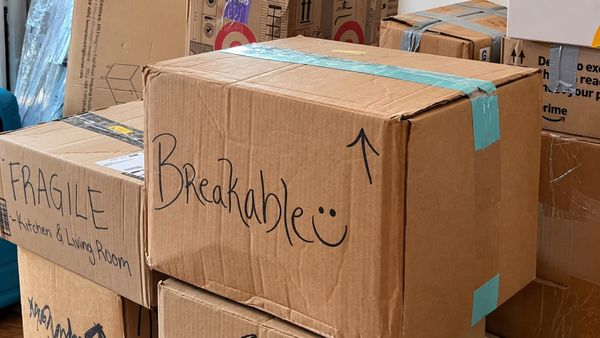
Skip buying new boxes when you can. Sturdy used boxes are free at grocery stores, liquor stores, and bookshops, and neighbors who just moved are usually glad to pass theirs along. For bigger moves, reusable plastic moving-box rental services drop off totes and pick them up afterward, so nothing ends up in the recycling stream at all. Whatever cardboard you do use, flatten and recycle it — or list it free for the next person moving.
3: Choose eco-friendly packing materials
Replace plastic bubble wrap and foam peanuts with materials you already own or that break down cleanly. Wrap fragile items in towels, linens, and clothing — they protect breakables and fill empty space so nothing shifts, doing double duty so you pack fewer separate materials. When you need cushioning you don't have on hand, choose recycled packing paper or biodegradable peanuts made from cornstarch over plastic. For a full walkthrough of protecting breakables, see Lugg's guide to packing fragile items.
4: Move efficiently — fewer trips, the right-sized truck
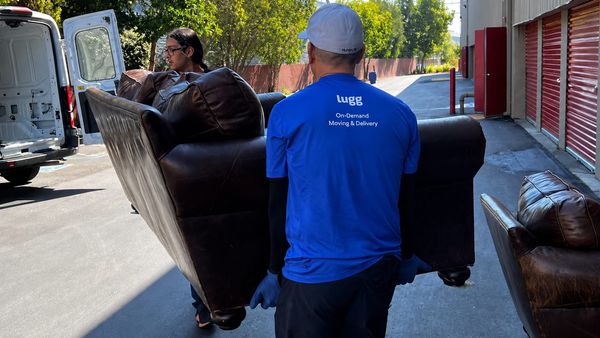
Transportation is where a move's carbon footprint adds up, so the goal is moving everything in as few miles as possible. Resist the urge to make a dozen car runs across town; one trip in a properly sized truck almost always burns less fuel per item. Right-size the vehicle to your load — too big wastes space and fuel, too small means repeat trips. If you're moving only a few blocks, consolidating into a single booking beats shuttling carloads. Booking movers who combine multiple stops — a donation drop, a storage visit, and your new place — into one route keeps the total miles down.
5: Donate, sell, and recycle what you're not taking
Keep usable items out of the landfill by routing them to someone who wants them. Donate clothing, furniture, and household goods to local charities like Goodwill or The Salvation Army — many offer pickup. Sell what's valuable on marketplaces, and recycle electronics, batteries, and scrap metal at proper drop-off points rather than the curb. If you're not sure where unwanted bulky items should go, Lugg's guide to finding a dump or donation center points you in the right direction, and a furniture donation pickup can move large pieces straight to a charity. For mattresses specifically — which are notoriously hard to recycle — see how to get rid of a mattress responsibly. Need a one-time haul to the dump or a thrift store instead? An on-demand service like Lugg can pick up donations and junk and drop them where they belong, often in the same trip as your move.
6: Green your cleaning routine
When you clean the old place and prep the new one, reach for non-toxic, biodegradable products — or make your own with vinegar, baking soda, and lemon juice. It cuts the harsh chemicals that end up in waterways, and homemade cleaners cost a fraction of store-bought sprays. Reusable cloths beat paper towels for the deep clean that move-out usually requires.
7: Dispose of the tricky stuff responsibly
Some items can't go in a donation box or the regular trash — and getting rid of them properly is part of a sustainable move. Paint, batteries, electronics, and chemicals are household hazardous waste and belong at a designated drop-off facility, not the curb or a moving truck. Check your city's sanitation site for hazardous-waste collection days. Handling these the right way keeps toxins out of landfills and waterways and keeps your move genuinely low-impact.
The greenest move is a lighter one
A sustainable move isn't about perfection — it's about reusing what you can, donating what you don't need, and keeping trips and waste to a minimum. Start by decluttering, pack with materials you already own, and route unwanted items to donation or recycling instead of the curb. Every small choice adds up, and the greenest move is almost always the lighter, better-planned one.