
The packing supplies you actually need for a move are sturdy moving boxes, packing tape, bubble wrap or packing paper, furniture blankets, and a permanent marker. That short list covers the vast majority of household moves. The goal is protecting your belongings without overbuying supplies you'll toss the next day. Here's exactly what to get, how much you'll need by home size, and where to buy it for less.
Quick reference: your moving supplies checklist
| Supply | What it's for | 1-bedroom | 3-bedroom | Where to buy |
|---|---|---|---|---|
| Small/medium boxes | Books, kitchen, decor | 15–20 | 40–55 | Home Depot, Lowe's, Amazon, free from stores |
| Large boxes | Linens, pillows, lampshades | 8–12 | 20–30 | Same as above |
| Packing tape (2") | Sealing boxes | 3–4 rolls | 6–8 rolls | Hardware/office stores |
| Bubble wrap or paper | Fragile items | 1 roll / bundle | 2–3 rolls | Hardware/office stores |
| Furniture blankets | Couches, dressers, tables | 4–6 | 8–12 | Buy or rent from moving suppliers |
| Markers + labels | Staying organized | 2 markers | 2–3 markers | Anywhere |
The five essentials (and how much you need)
Moving boxes
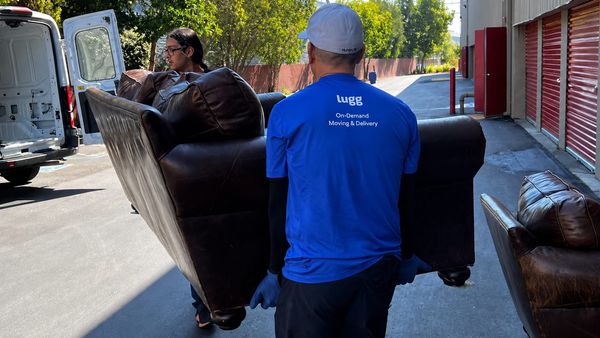
Most households need between 30 and 60 moving boxes, scaling with home size and how much you've decluttered. Buy a mix: small and medium boxes carry the weight of dense items like books and dishes, while large boxes are best for light, bulky things like bedding and pillows. Look for double-walled, corrugated cardboard rated for the weight you're packing. You can buy new boxes from Home Depot, Lowe's, or Amazon, or get sturdy used ones for free from grocery stores, liquor stores, and online marketplaces. If you're picking up free boxes or a secondhand piece across town and don't have a truck, an on-demand service like Lugg can haul it without a rental.
Packing tape
Use heavy-duty packing tape at least two inches wide, and plan on one roll for every eight to ten boxes. Reinforce the bottom seam of every box with two or three strips — most blowouts happen there, not the top. Skip the cheap dollar-store tape; it splits in humidity and won't hold a full box of books. A tape gun is worth it once you're past 20 boxes.
Bubble wrap or packing paper
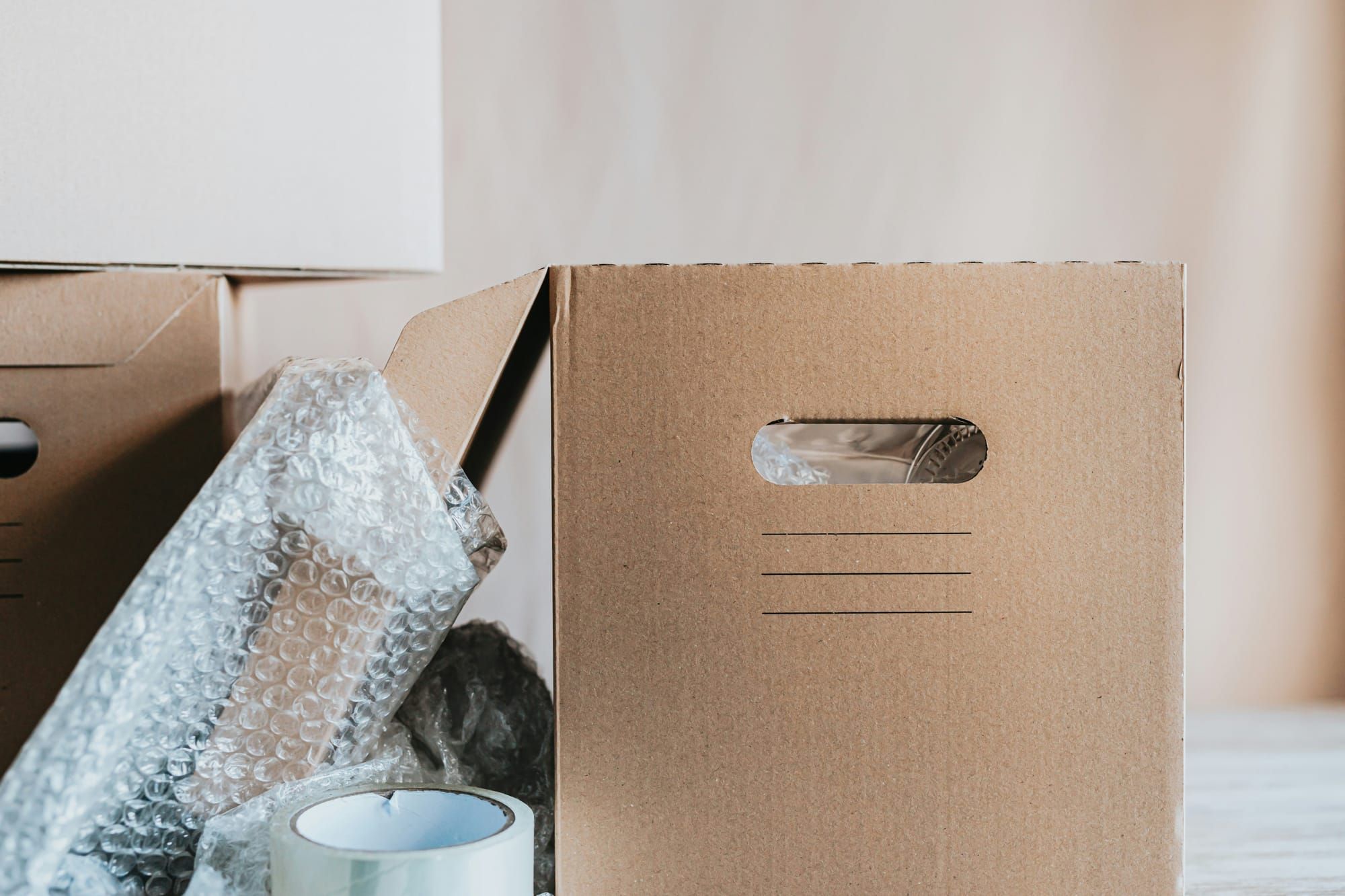
Wrap anything breakable — glassware, dishes, framed art, electronics — in bubble wrap or several sheets of plain packing paper. Packing paper is cheaper and recyclable, while bubble wrap gives heavier cushioning for true fragiles. You can reuse bubble wrap saved from online orders, and clean newsprint or hand towels work in a pinch. For a full walkthrough of protecting breakables, see Lugg's guide to packing fragile items.
Furniture blankets (moving pads)
Furniture blankets are thick, padded covers that protect couches, dressers, tables, and headboards from scratches, dents, and torn upholstery in transit. Most one-bedroom moves need four to six; a full house needs a dozen or more. You can buy them, but renting is usually cheaper for a one-time move — and professional movers typically bring their own. Pair them with stretch wrap to hold the padding in place and keep drawers and doors shut. (For tip-prone pieces, our guide to moving a dresser covers the safe way to do it.)
Markers and labels
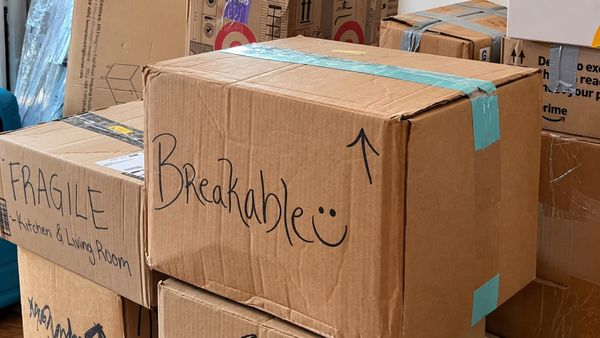
Label every box on the top and at least two sides with the room it belongs to and a one-line summary of what's inside. This single habit saves the most time on unpacking day, because movers can drop boxes in the right room and you can find essentials fast. Use a thick permanent marker, and consider color-coding by room with colored tape or dot stickers.
A few extras worth having
A handful of supplies aren't strictly essential but earn their place: stretch wrap (for bundling, securing blankets, and keeping drawers closed), mattress bags (to keep beds clean and dry), and a basic toolkit for taking apart bed frames and table legs. A dolly or hand truck makes a big difference if you're moving without professional help — though it's also one more thing to rent or store.
What you can skip
You don't need specialty dish-pack kits, branded "moving labels," or plastic bins for a short local move — they cost more than they save. Plastic packing peanuts are messy and hard to recycle; crumpled paper or towels do the same job. And resist buying more boxes "just in case." Most stores let you return unused flat boxes, and overbuying is the easiest way to waste money on supplies you'll recycle the next week.
Where to buy moving supplies for less
The cheapest path is a mix of free and new. Source free used boxes from grocery and retail stores, online marketplaces, and neighbors who recently moved — cardboard is one of the most-recycled materials in the U.S., with a recovery rate around 68% for paper and paperboard, so used boxes are easy to find and easy to pass on afterward. Buy only the consumables you can't scrounge — tape, wrap, and markers — new. If you'd rather not chase boxes around town, reusable plastic moving-box rental services deliver and pick up, which can pencil out for larger moves. Whatever you don't use, break down and recycle, or list it free for the next mover.
How many boxes do I need by home size?
| Home size | Total boxes (approx.) | Notes |
|---|---|---|
| Studio / 1-bedroom | 25–35 | More if you cook a lot or have many books |
| 2-bedroom | 40–55 | Add wardrobe boxes for hanging clothes |
| 3-bedroom | 55–80 | Declutter first to cut this number |
| 4+ bedroom | 80–120+ | Consider a staged, room-by-room pack |
Decluttering before you pack is the single biggest lever on these numbers — fewer items means fewer boxes, a smaller truck, and a lower bill. Lugg's guide to downsizing before a move walks through how to cut your load room by room, and choosing the right truck size helps you avoid paying for space you don't need.
What to buy first
Five supplies — boxes, tape, wrap, furniture blankets, and a marker — handle almost any move, and the smartest way to buy them is a mix of free used boxes and new consumables. The less you own on moving day, the fewer supplies you'll need in the first place, so declutter before you pack. And if hauling it all yourself sounds like the worst part, booking on-demand movers who arrive with their own blankets, straps, and dollies takes the heaviest lifting off your plate.