
Starting a box truck business means putting a box truck to work hauling freight, furniture, or last-mile deliveries for pay — and the lowest-risk way in is to start earning with the truck before you take on the cost and paperwork of your own operating authority. Demand is real: the global last-mile delivery market was about $167 billion in 2025 and is projected to reach $349 billion by 2033. But "start a business" can mean two very different things with very different price tags, and most guides skip straight to the expensive one. This breaks down both, in the order the costs actually hit.
There are two box truck businesses, and they cost wildly different amounts
The first decision is which model you're building. 'Box truck business' covers two paths that share a vehicle and almost nothing else.
| Path | What you do | What you need | How fast you earn |
|---|---|---|---|
| Local moving & delivery (platform) | Pick up slots with a platform like Lugg, complete local moves and deliveries | A qualifying truck + basic equipment; no authority | Same day as you work |
| Independent freight (your own authority) | Find loads on boards, haul freight regionally | MC number, USDOT number, commercial insurance, ~$20k startup | Months |
The platform path gets you paid almost immediately (same day payouts) with very little upfront. The independent-freight path can pay more per load eventually, but it front-loads thousands in registration, insurance, and dead time before your first dollar.
Do you need a CDL to drive a box truck? Usually not
For most box trucks, no. A commercial driver's license is only required once a vehicle's gross weight rating crosses a federal line: the FMCSA requires a CDL for vehicles rated at 26,001 pounds or more, which is exactly why the 26,000-lb box truck is the most popular size on the road — it carries the most while staying one pound under the threshold. Anything at or below 26,000 lbs GVWR can be driven on a standard license for weight reasons alone.
A few caveats matter: hauling hazardous materials or designing the vehicle to carry 16+ people triggers a CDL regardless of weight, and you're expected to be qualified for the truck's rated capacity, not just what's loaded that day. For local moving and delivery work, though, the common Lugg-eligible vehicles — pickups, cargo vans, sprinters, and standard box trucks — sit well under the line, so no CDL is needed to start.
What it actually costs to start
Budget for the path you chose, because the gap is enormous. On the platform path, your real costs are the truck you may already own, fuel, basic moving equipment (blankets, straps, a dolly), and insurance — you can be working within the week.
The independent-freight path is where the money goes early. Plan for your own MC and USDOT authority, a BOC-3 filing, and commercial trucking insurance that commonly runs $12,000–$22,000 a year per truck for a brand-new authority. Add a used 26-foot truck (a liftgate is worth the premium — without one you're locked out of most residential and no-dock jobs) and working capital for the slow first months, and a realistic startup figure lands around $20,000. If you don't already own the truck, factor in the payment on top. This is why testing the work before you commit is the smarter sequence.
What truck to buy if you don't already own one
If you're starting from scratch, the truck choice shapes both your costs and the jobs you can take. For local moving and delivery, you don't need a 26-footer — a cargo van, sprinter, or a 12- to 18-foot box truck handles most household and small-business work and is far cheaper to buy, fuel, and insure. Go bigger only if you're chasing freight or high-volume commercial loads.
Three specifics decide whether a truck earns or sits. First, a liftgate: it's not required for platform work, but without one you're locked out of most independent freight residential jobs, so it's usually worth the premium on a used truck. Condition matters next — buyers can find a reliable used box truck for a fraction of new, but a clean maintenance history beats low mileage on a work vehicle. And confirm the gross weight rating keeps you under that 26,001-lb CDL line if you want to drive on a standard license. If you already own a qualifying pickup, van, or box truck, skip all of this and put the one you've got to work first.
Where the work actually comes from
A truck doesn't earn until you have a reliable source of jobs, and the source depends on your path. Independent-freight operators find loads on boards like DAT and Truckstop, build direct shipper contracts over time, and live with the feast-or-famine of spot rates until those contracts exist.
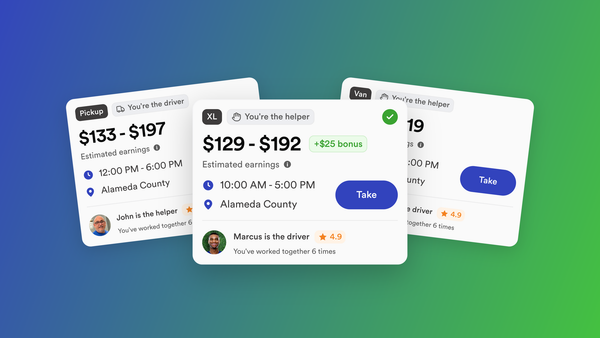
For local moving and delivery, the work comes through demand platforms instead — and that's the fastest on-ramp for a box truck owner. On Lugg, you don't need your own authority or a load board: you sign up to drive, pass a background check, and once you're activated you claim slots and complete moves in your market. You earn a percentage of each customer's fare, 100% of customer tips, and same-day pay puts the money in your account the night you work. The guide to driving for Lugg walks through what a slot actually looks like from claim to payout.
The lower-risk way to start: earn first, incorporate later
If you're not sure the work is for you, don't lead with $20,000 in authority and insurance. Lead with the truck. The smartest sequence for most people is to start taking local jobs through a platform, learn what the days actually feel like and what they pay, and only stand up your own authority once you know freight is worth the overhead.
Don't skip the boring parts: registration, insurance, and taxes
Whichever path you pick, set up the business side properly from day one — it's cheaper than fixing it later. Register the business and get an EIN through the SBA's guide to launching a business; a simple LLC is the common starting structure. Carry the right insurance for how you actually use the truck — you may need a commercial policy or, on some platforms, appropriate coverage for delivery work.
Don't forget to plan for taxes from your first paid job. Whether you're on a platform or hauling your own loads, this is 1099 self-employment income: you track your miles, set aside a portion of every payout for taxes, and file a Schedule C. The upside is real deductions — mileage, your phone, equipment, insurance — but only if you keep records from the start. Treat it like the small operation it is, even if it's just you and one truck on weekends.
Curious how the pay stacks up against other driving gigs first? We compared it in how much truck drivers make.
Start the truck earning this weekend, build the business from there
A box truck business doesn't have to begin with a five-figure check and a stack of federal filings. It can begin with the truck you already have and a single weekend of local jobs, then grow into your own authority once you've proven the work pays for you. If you've got a qualifying truck or van and want it earning while you figure out the rest, the Lugg sign-up takes about two minutes — same-day pay starts with your first completed move, and you can scale into the bigger business on your own timeline.