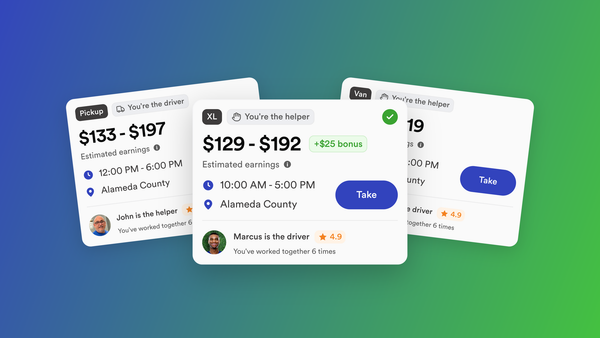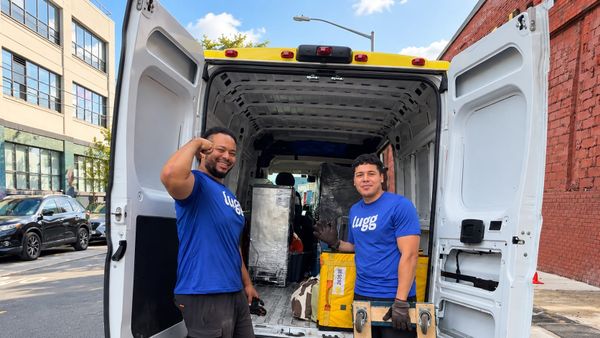


The jobs that actually work around a class schedule are the ones you pick up one day at a time, with nothing owed for the weeks you don't work. At Lugg the work runs every day of the week, so you're picking from whichever days your class schedule leaves open.
Lugg is an on-demand moving and delivery service that posts its work as single slots you pick up yourself and pays per job, with no set weekly hours. Perfect for a student who wants to choose which days they work and skip the weeks they can't.
Most students will start as a Moving Helper, which averages $18 an hour plus tips and is the easier of the two ways in: a smartphone, the ability to lift up to 125 lbs, and 18 or older. No vehicle involved and nothing to buy.
| Moving Helper | Driver | |
|---|---|---|
| Minimum age | 18 | 21 |
| What you bring | A smartphone, and the ability to lift up to 125 lbs | A qualifying pickup truck, cargo van, XL van, box truck or Box+, insurance in your own name, and basic moving equipment |
| Average pay | $18/hr on average, plus tips | $28–$47/hr on average depending on the vehicle, plus tips |
| Background check | Required | Required |
| CDL | Not needed | Not needed |
Those hourly figures are averages rather than starting rates, and they don't blend together. A helper's average and a driver's ladder are two different numbers for two different roles.
How many hours a week should you work in college?
A 2025 College Ave survey of 1,060 undergraduates found students working an average of 16 hours a week, and that most find part-time work between 10 and 20 hours manageable. That range converts cleanly into slots. One full day lands you at the bottom of it. Two put you near the top. Nothing gets scheduled for you in between, so a week with three deadlines in it is a week you simply don't pick anything up.
On campus jobs are the usual first stop, and for good reason. Work study, dining halls and library desks are all built around the academic calendar, so they bend when your term does. What most of them can't do is let you decide week to week. The hours get posted, and once you're on the schedule you're on it.
Picking up moving slots gets you the same calendar fit from the other direction. You take whole days out of your own week, and the weeks you take nothing are weeks nobody has to approve.
Some markets also open custom slots in the evening, starting around 5 or 6pm, which can work on a day when class runs through the afternoon.
Can you work for Lugg at 18?
Yes, at 18 you can sign up as a Moving Helper, the role that needs a smartphone and no vehicle. That's the route most students take, and it opens three years earlier than a lot of vehicle gig work. Amazon Flex requires you to be 21 or older, and food delivery apps generally start at 18 but expect you to supply and run a car. If you're weighing the Amazon routes specifically, Amazon driver jobs in 2026 puts DSP and Flex pay side by side.
Lugg is an on-demand moving and delivery service where the helper role starts at 18 and needs nothing but a phone. It fits a first- or second-year student who can lift and doesn't have a car to put on the road.
Driving with Lugg opens at 21, which is when the vehicle side of the platform becomes available.
What each role pays, and what it asks for
Moving Helper
Helpers average $18/hr, which lands at $130 to $250 on an average day, plus tips. You bring a phone and the ability to lift up to 125 lbs, and you work alongside a driver who brings the vehicle and the equipment. There's nothing to insure and nothing to buy.
This is where most students start, and it's the fastest route from signing up to working a day. You're paired with a driver who knows the route and the building, so the first slot is a learn-as-you-go day rather than something you need to prepare for. The full walkthrough is in how to become a Lugg helper, and the role page is Moving Helper.
Driver
The driver side asks for more and it pays more: $28–$47/hr on average plus tips, with the vehicle setting where you land. A pickup truck averages $28/hr, a cargo van $32, an XL van $37, a box truck $42, and Box+ $47. Lugg doesn't require a CDL for any of them.
This one is worth it if you already own something that qualifies, and a pickup truck sitting unused between semesters is the clearest case. You'll need a vehicle from 2001 or newer in sound condition, insurance in your own name with proof you own it or are an insured driver on it, and basic moving equipment: blankets, ratchet straps, a dolly and stretch wrap, plus a tarp for a pickup truck. That kit is a small one-time cost that tends to pay for itself in a slot or two, and mileage and tolls are reimbursed for qualifying zone miles at a set rate, plus most required tolls.
If you've got the vehicle, what pickup trucks qualify for Lugg covers the bar in detail, and the role page is pickup truck driver.
What a moving slot actually involves
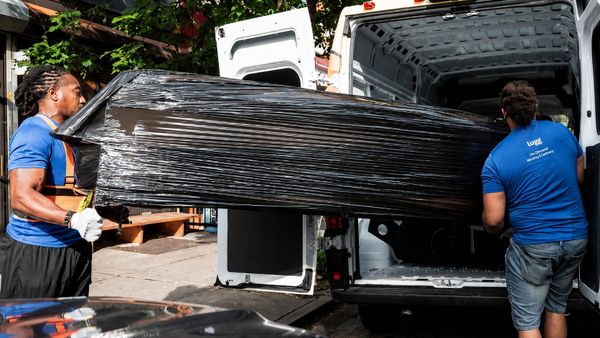
You're moving furniture and household items in and out of homes, apartments and storage, up to 125 lbs on your own and up to 250 lbs with your crew. It's physical and straightforward, with no register, no upselling and no closing routine at the end of the night.
Neither role needs prior moving experience or a résumé. The bar is the lift, a background check, and turning up for the slots you picked up. Lugg pays for the check up front and takes the cost out of future earnings, so a first slot costs you nothing to start.
Pay lands the same day you work it, and tips come on top, split evenly with your crew with no cut taken. How to become a Lugg helper walks a first slot through end to end.
When the work is busiest
Moving has a season, and it lines up with a student calendar better than most jobs do. August is the busiest month of the year and the season runs May through August, so the stretch right before classes start is also the stretch with the most work in it.
There's a monthly pattern worth watching for as well. Leases turn at the end of the month, so the last few days of one month and the start of the next carry the most work. If you're trying to earn as much as you can from a limited number of free days, those are the days to look for slots, and they come around twelve times a year rather than once.
How do you set up Lugg work around a class schedule?
1: Sign up before the semester starts
Sign-up runs about two minutes, and activation usually takes up to a week with the background check inside that window. Starting the sign-up in the gap before classes begin means your first free day is already yours to use.
2: Pick the days that are already clear
Most student jobs are built around a schedule somebody else posts. Here you're looking for whole free days instead of gaps between classes. A Wednesday with nothing on it is a day you can work. Mark the two or three days a week that are genuinely open and start there.
Then line those days up against the month-turn pattern above. A free Thursday that happens to be the 30th is worth more than a free Thursday on the 14th.
3: Start with one slot, not a routine
Take one before you plan a second. You'll know quickly whether a full day of moving fits alongside a heavy week of coursework, and that's a much better basis for building a semester around two a week than guessing at it in advance.
4: Treat a slot you've picked up like a class
The flexibility sits in choosing which slots to pick up rather than in walking away from one you've taken. Put it in the same calendar as your classes, and skip the weeks you already know are heavy.
Picking up your first slot this semester
If you're 18 and you can lift, the Moving Helper route needs nothing you don't already own, and it's easier to set up now than halfway through a semester. If you're 21 with a qualifying pickup truck, cargo van, XL van or box truck, the driver ladder starts at $28/hr on average and climbs with the vehicle.
It carries over into the summer, too. August is the busiest moving month of the year and May through August is the high season, so the months you're out of class are the ones with the most work going. If you've picked up a day here and there during the semester, you're already set up for it. The best high paying summer jobs covers that side of it in more detail.
The sign-up takes about two minutes, and the team activates most people within the week. Pick the days you're genuinely free, and take one slot before you take two.